What Makes Stem Cell Therapy Different From PRP?
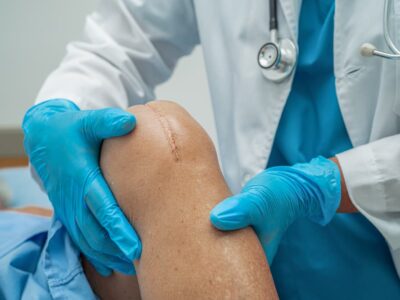


People often hear platelet-rich plasma and stem cell therapy mentioned in the same conversation, usually in the context of joint pain, tendon injuries, arthritis, or sports medicine. From the outside, they can sound interchangeable. Both involve drawing from the patient’s own body in many cases. Both are framed as regenerative treatments. Both are offered as alternatives to surgery or repeated steroid injections. Yet they are not the same tool, and treating them as if they are can lead to poor expectations and, sometimes, poor decisions.
The difference matters most when a patient is sitting in an exam room trying to answer a practical question: which treatment is more likely to help my specific problem? That answer depends on biology, severity of damage, treatment goals, cost, recovery time, and the quality of the clinic offering it. In real practice, the best choice is rarely about whichever option sounds more advanced. It is about matching the treatment to the tissue, the injury pattern, and the patient’s timeline.
Two therapies, two very different biological jobs
PRP begins with a blood draw. The sample is spun in a centrifuge to concentrate platelets, which are small cell fragments involved in clotting and healing. Those platelets contain growth factors and signaling proteins. When injected into an injured area, PRP aims to stimulate a healing response. It is less about replacing damaged tissue and more about amplifying the body’s existing repair signals.
Stem cell therapy is a broader and more complex category. In orthopedic and sports medicine settings, the term usually refers to a cell-based treatment derived from bone marrow, adipose tissue, or certain donated tissue sources depending on regulation and clinical setting. The cells involved are often mesenchymal stromal cells, commonly called mesenchymal stem cells in everyday discussion, though that shorthand can oversimplify what they actually do. These cells are valued for their ability to modulate inflammation, influence local healing, and interact with damaged tissue in ways that go beyond the growth factor burst seen with PRP.
That distinction is the heart of the matter. PRP is primarily a concentrated signaling product. Stem cell therapy is a cell-based biologic approach. One delivers a high concentration of healing messengers. The other introduces living cells, or a cell-rich aspirate, that may continue interacting with the tissue environment after injection.
Why the names create confusion
Part of the confusion comes from marketing. PRP is sometimes described in language that makes it sound more powerful than it is. Stem cell therapy is often described in language that makes it sound almost magical. Neither extreme helps patients.
Another issue is that "stem cell therapy" is not one single, standardized product. A PRP injection can vary, certainly, by platelet concentration, leukocyte content, spin method, and injection technique. But stem cell procedures can vary even more dramatically. Bone marrow aspirate concentrate is different from expanded cell products. Adipose-derived preparations differ from bone marrow-derived preparations. Regulatory rules differ by country and by the type of processing involved. Two clinics may both advertise stem cell therapy while offering treatments that are biologically and clinically quite different.
That means any honest comparison has to begin with definitions. If a clinic cannot clearly explain where the cells come from, how they are processed, and what evidence supports the intended use, that is a warning sign.
PRP works like a biologic alarm bell
A useful way to think about PRP is that it helps the body notice and organize repair. Platelets release growth factors such as PDGF, TGF-beta, VEGF, and others involved in cell recruitment, blood vessel formation, and tissue signaling. This can be helpful in tissues that are slow to heal or trapped in a chronic, low-grade inflammatory state.
Tendons are a classic example. A patient with chronic tennis elbow or patellar tendinopathy may not have a full structural failure. Instead, the tendon is degenerative, painful, and stubborn. In those cases, PRP can sometimes shift the environment enough to restart a healing cascade. It is not instant. In fact, patients often feel soreness or a temporary flare before improvement begins. But when it works, it can reduce pain and improve function over a period of weeks to months.
PRP can also be used for mild to moderate osteoarthritis, certain ligament https://andrenawo865.timeforchangecounselling.com/how-safe-is-stem-cell-therapy-facts-you-should-know injuries, plantar fasciitis, and some muscle injuries. Results vary. Part of that variation comes from the condition itself, and part comes from how PRP is prepared and delivered.
Stem cell therapy aims for a broader regenerative effect
Stem cell therapy, especially when using bone marrow aspirate concentrate, is usually considered when the problem appears deeper, more complex, or less responsive to simpler interventions. The aspiration is commonly taken from the pelvic bone because bone marrow contains progenitor cells and other biologically active components. The concentrate may include mesenchymal stromal cells, hematopoietic cells, platelets, cytokines, and other marrow elements.
These cells do not simply arrive and turn into a brand-new tendon or a fresh layer of cartilage. That is one of the biggest public misconceptions. In real clinical discussion, the value of stem cell therapy is usually tied to signaling, immune modulation, and support of repair processes rather than straightforward tissue replacement. The cells can influence inflammation, interact with local cells, and potentially create a more favorable healing environment over time.
Where does that matter? A patient with more advanced joint degeneration, a focal cartilage defect, or a complex tendon or ligament problem may be a candidate for a cell-based procedure when PRP alone seems less likely to move the needle. That does not guarantee a better outcome. It means the biological rationale is different and, in some cases, stronger for certain patterns of damage.
The source of the treatment changes the experience
One practical difference patients notice immediately is how the procedure feels.
PRP usually involves a blood draw from the arm, processing the blood, and injecting the concentrate into the target area. It is often done in one office visit. While image guidance is strongly preferred for many joints and soft-tissue structures, the overall process is relatively straightforward.
Stem cell therapy can be more involved. If the cells are taken from bone marrow, there is an aspiration procedure before the injection. Even when done under local anesthesia and sedation, the harvest is more invasive than a routine blood draw. Patients may have soreness at the donor site for several days. The processing step can also be more technically demanding depending on the method used.
This matters because treatment burden matters. Some people are willing to accept a more invasive and more expensive procedure if the condition is severe and the potential upside is greater. Others would be better served by starting with a simpler option.
The best use cases are not identical
PRP and stem cell therapy overlap, but they are not aimed at exactly the same clinical situations.
PRP tends to fit best when the tissue still has meaningful healing capacity and the main goal is to stimulate repair. That often includes chronic tendinopathies, milder ligament injuries, early osteoarthritis, and overuse injuries in active patients. I have seen patients with stubborn lateral epicondylitis who had cycled through rest, braces, therapy, and anti-inflammatories finally improve after a carefully placed PRP injection. The pattern there makes sense. The tendon is not gone. It is biologically stalled.
Stem cell therapy is more commonly discussed when the injury looks less like a stall and more like a structural problem with a less favorable environment. Think moderate degenerative joint disease in a younger patient trying to delay surgery, or a patient with a focal cartilage injury after trauma, or a recurrent tendon issue that has already failed more conventional care. It can also come up in cases where clinicians want a richer biologic signal than PRP alone may provide.
That said, severity alone does not automatically point to stem cells. If a knee has severe bone-on-bone arthritis, major deformity, and years of progressive limitation, neither PRP nor stem cell therapy is likely to recreate a normal joint. In that setting, overselling regenerative care does real harm. Good medicine includes knowing when a biologic injection is unlikely to meet the patient’s goals.
A short comparison that actually helps
Here is the simplest practical distinction:
- PRP uses concentrated platelets from blood to deliver growth factors and stimulate healing signals.
- Stem cell therapy uses cell-rich material, often from bone marrow or adipose tissue, to provide a more complex biologic response involving living cells.
- PRP is usually less invasive, less expensive, and easier to repeat.
- Stem cell therapy is usually more invasive, more expensive, and considered for more complex or resistant cases.
- Neither treatment is a cure-all, and both depend heavily on diagnosis, technique, and patient selection.
That summary is useful, but it should not replace a proper evaluation. Two patients with the same MRI phrase, such as "partial-thickness tear" or "moderate osteoarthritis," may not be equally good candidates.
Cost is not a side issue, it is part of the decision
Patients often hesitate to bring up cost, but it is central to treatment planning because these procedures are frequently self-pay. PRP is usually less expensive than stem cell therapy, though pricing varies widely by region, specialty, and whether ultrasound or fluoroscopic guidance is used. Stem cell therapy typically costs more because it involves harvesting, more processing, and often a more specialized setup.
The more important financial question is value. A less expensive treatment is not truly cheaper if it has little chance of helping the condition in front of you. On the other hand, a more expensive treatment is not better simply because it sounds more sophisticated. Patients deserve a candid discussion about expected benefit, alternatives, and the possibility that neither option is the right use of their money.
I have found that the most grounded clinicians are usually comfortable saying, "This may help, here is where it tends to work best, here is where I would be cautious, and here is what I would do if it were my own knee or shoulder." That kind of conversation is far more valuable than a glossy package price.
Recovery is often misunderstood
Neither PRP nor stem cell therapy should be thought of as a same-day fix, even when the injection itself is done quickly.
With PRP, there is often an initial inflammatory phase. That can mean increased soreness for several days. Some patients worry the treatment failed because the area feels more irritated before it feels better. For the right indication, that early flare can be part of the intended biologic response. Improvement often unfolds gradually over four to twelve weeks, and sometimes longer.
Stem cell therapy can involve a slower and more layered recovery. There may be soreness from the harvest site as well as the injection site. Follow-up rehabilitation matters. Activity modification matters. In joint cases, progress may take months rather than weeks. If a patient expects to get a single injection on Friday and return to hard tennis on Monday, expectations need to be reset before treatment ever starts.
Technique matters more than many patients realize
A biologic treatment is only as good as the diagnosis and the placement. Injecting PRP into the general region of pain is not the same as precisely targeting a diseased tendon under ultrasound. Likewise, saying a patient received stem cell therapy tells you almost nothing about the quality of the procedure unless you know the source, preparation, and delivery method.
Image guidance is especially important in joints, deep tendons, and small structures where anatomic precision changes outcomes. So does knowing what not to inject. A clinician who understands biomechanics, rehab progression, and tissue behavior over time is much more likely to use biologics well than someone who treats them like a menu add-on.
This is where experience shows. A runner with proximal hamstring tendinopathy, for example, is not just asking for an injection. That person needs someone to distinguish tendon pain from referred lumbar pain, evaluate gluteal weakness and load tolerance, decide whether biologic treatment is even appropriate, and coordinate rehab after the procedure. The injection is only one part of the plan.
The evidence is promising in places, thin in others
Patients sometimes expect a simple answer from the research, but the literature is uneven. PRP has reasonably encouraging evidence for certain tendinopathies and mild to moderate knee osteoarthritis, though outcomes are not uniform and protocols vary. There are still studies with mixed results, partly because one PRP product is not identical to another.
Stem cell therapy is even harder to study cleanly because the treatments grouped under that label differ so much. Some early and mid-stage studies suggest benefit in knee osteoarthritis and certain orthopedic applications, but the field still struggles with standardization, long-term data, and apples-to-apples comparison. That does not mean it is ineffective. It means the strength of evidence is not the same across every diagnosis being marketed to patients.
Clinicians with integrity tend to speak in probabilities, not promises. They explain that evidence may support use in selected cases while still being incomplete. That is a very different message from saying a treatment can regrow cartilage everywhere or reverse advanced degeneration.
Who should be cautious
Some people are poor candidates no matter how attractive the idea sounds. Active infection, certain blood disorders, severe uncontrolled medical illness, and some forms of advanced structural damage can make biologic treatment less appropriate or less safe. Smokers and patients with poorly controlled metabolic disease may also heal less predictably. Medications matter too. Anti-inflammatory drugs around the time of PRP can interfere with the intended inflammatory response, which is why many protocols place restrictions on them.
The other group that needs caution is the impatient buyer. If someone is shopping based only on a website headline or a celebrity endorsement, it is easy to end up with a treatment that sounds regenerative but was never well matched to the actual diagnosis.
Questions worth asking before choosing either option
A careful consultation should answer a few direct questions:
- What exactly is the diagnosis, and what evidence supports it?
- Why do you believe PRP or stem cell therapy fits this problem better than other options?
- What is being injected, where does it come from, and how is it processed?
- Will the procedure be performed with ultrasound or other image guidance?
- What does realistic recovery look like over the next three to six months?
Those questions are not confrontational. They are basic due diligence. A credible clinic should welcome them.
The role of PRP and stem cell therapy in a bigger treatment plan
One common mistake is treating biologics as standalone miracles. In practice, outcomes are often better when the injection is integrated into a larger strategy. That may include strength work, movement retraining, unloading a painful structure for a period, improving sleep, addressing body weight when joint load is a factor, or fixing training errors that caused the problem in the first place.
Take knee osteoarthritis in a 52-year-old recreational athlete. If that patient gets PRP or stem cell therapy but continues high-impact activity without adjusting strength, mobility, and training volume, the biologic treatment is being asked to rescue a poor mechanical environment. Sometimes it still helps, but often not as much as hoped. The best results usually come when biology and mechanics are addressed together.
So what truly makes Stem Cell Therapy different from PRP?
The cleanest answer is this: PRP primarily boosts healing signals, while Stem Cell Therapy introduces a more complex cell-based biologic environment. PRP is often the simpler, less invasive option for conditions where tissue can still respond to a strong healing nudge. Stem cell therapy is generally considered when clinicians want a broader regenerative effect, particularly in harder cases or when PRP may not be enough on its own.
That does not make stem cell therapy automatically superior. A well-chosen PRP injection for the right tendon problem can outperform a poorly indicated stem cell procedure every time. Likewise, a carefully selected cell-based treatment may offer meaningful benefit in a case where PRP would likely fall short. The important difference is not just what is in the syringe. It is what the biology of that syringe is being asked to accomplish.
For patients, that means the smartest next step is not asking which treatment is newer or more impressive. It is asking which treatment fits the actual tissue problem, the stage of damage, the evidence for that indication, and the life you are trying to get back to. When that question is answered honestly, the choice becomes much clearer.
Denver Regenerative Medicine | Stem Cell Therapy, HRT, Testosterone Clinic
Address: 5040 Corporate Plaza Dr Ste 7, Colorado Springs, CO 80919
Phone number: +17205831648
FAQ About Stem Cell Therapy
What are the negative side effects of stem cell therapy?
Stem cell therapy can cause mild short-term reactions like injection-site pain, fatigue, and low-grade fever. More serious risks include infection, immune system rejection, blood clots, unintended tissue growth or tumors, and severe complications from unproven treatments at unregulated clinics.
What diseases can stem cells cure?
Currently, stem cells routinely and effectively cure specific blood cancers, immune deficiencies, and blood disorders using established bone marrow or cord blood transplants. Most other applications—such as for Parkinson's, diabetes, or heart failure—remain experimental or in clinical trials rather than proven cures.
Do stem cell treatments really work?
Yes, stem cell treatments work, but only for a very specific group of conditions. Hematopoietic stem cell transplants (bone marrow transplants) are fully proven and widely used to treat blood cancers like leukemia and lymphoma. However, commercial stem cell treatments for joint pain, arthritis, and wrinkles are largely unproven, experimental, and costly.